
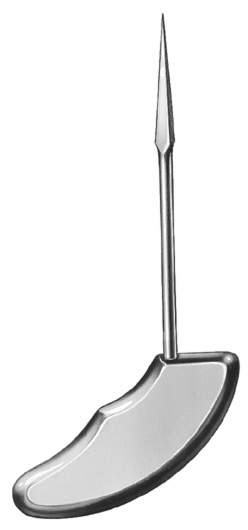
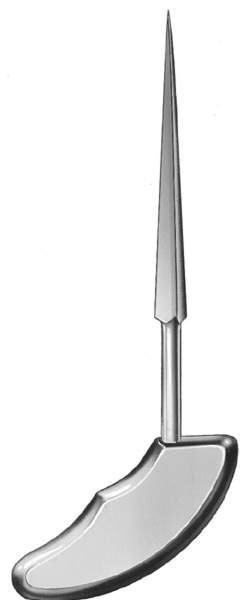
In bone surgery, “Perthes” typically refers to Perthes forceps or Perthes retractors. These surgical instruments are named after Arthur Perthes, a German orthopedic surgeon who made significant contributions to the field in the late 19th and early 20th centuries.
Perthes Forceps:
Perthes forceps are commonly used in orthopedic and bone surgery to grasp and manipulate bone fragments, tissues, or other surgical materials. They have serrated jaws that provide a firm grip, and they often feature ratcheted handles to maintain grip strength during procedures. Perthes forceps come in various sizes and configurations to accommodate different surgical needs and anatomical structures. They are particularly useful in procedures such as bone fracture reduction, fixation, and bone grafting.
Perthes Retractors:
Perthes retractors are surgical instruments used to hold back soft tissues, providing optimal exposure and access to the surgical site during bone surgery. They typically have broad, flat blades with a curved or angled design to gently retract tissues without causing damage. Perthes retractors may be self-retaining or handheld, depending on the specific surgical procedure and the surgeon’s preference. They play a crucial role in maintaining a clear surgical field and facilitating precise surgical maneuvers.
Both Perthes forceps and retractors are essential tools in orthopedic and bone surgery, helping surgeons perform procedures safely and effectively while minimizing tissue trauma and improving surgical outcomes.


Reviews
There are no reviews yet.